Grade control vs. volumetric production estimates: what's the difference?
If you've spent any time reading NI 43-101 technical reports or JORC updates, you've run into both terms in the same paragraph and watched them get used almost interchangeably. They're not the same thing, and the gap between them is exactly where an analyst trying to call quarterly output ahead of disclosure gets into trouble.
What grade control actually measures
Grade control is the mine's own internal process for deciding what to do with material once it's broken. Blast-hole samples get assayed, the results get kriged or modeled into a short-term block model, and that model tells the dispatcher which blocks go to the mill and which go to waste. It's an assay-based exercise, built on physical samples pulled from the rock itself. It's also the tightest, most accurate picture of ore grade anyone has, because it's literally measuring the metal content of the material being moved.
The catch is that grade control data almost never leaves the mine site in real time. It's proprietary, it's granular to the block level, and it's not something operators publish between quarters. An analyst outside the company has no practical way to see it until the next MD&A or production report lands, and by then the quarter is already closed.
What a volumetric estimate measures instead
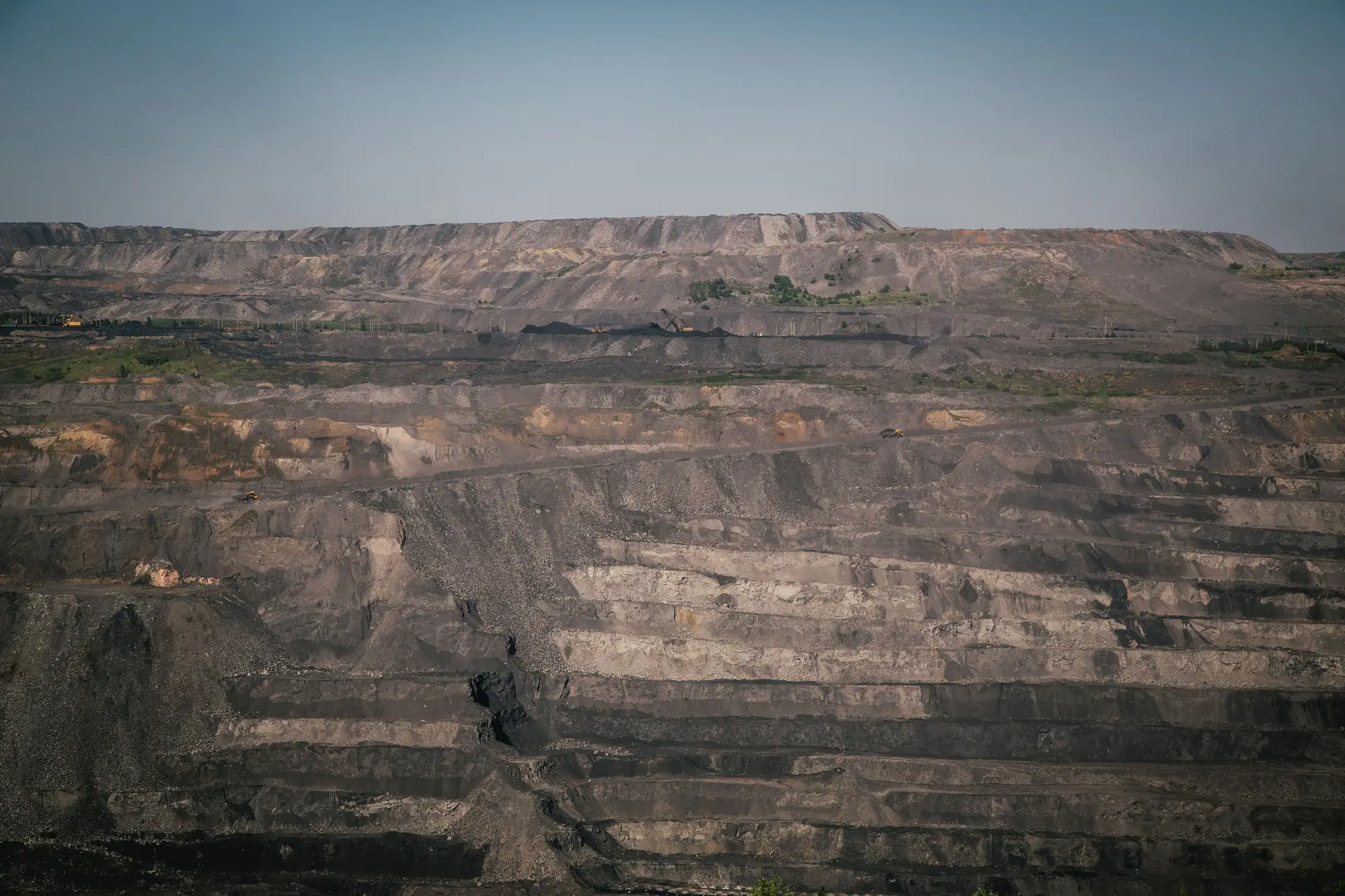
A volumetric estimate skips the assay question entirely and answers a narrower one: how much rock moved. Stereo satellite imagery over a pit, captured monthly, lets you measure bench advance, stockpile growth or drawdown, and waste dump placement. Compare two passes and you get a tonnage-moved figure for the period, the same kind of volumetric reconciliation a mine surveyor would run off drone or LiDAR data, just from orbit and without needing site access.
That volume figure measures activity, not grade: whether the pit is scaling up, holding steady, or slowing down. Paired with a reasonable assumption about strip ratio and mill head grade, which most operators disclose somewhere in their technical reports, a volumetric read turns into a usable output estimate well before the company's own numbers come out.
Why the two numbers can diverge
This is where a lot of first-pass estimates go wrong. A pit can show strong volumetric movement in a given month and still post a weak production quarter, because the material moved was low-grade waste stripping rather than ore. The reverse happens too: visible movement looks flat because the operation is pulling high-grade ore from a tight bench while stripping ratios stay low, so tonnes moved understate the value coming out of the ground.
Volumetric data also can't tell you about mill recovery, blending decisions, or stockpile rehandle, all of which grade control and plant metallurgists track closely and none of which show up in a stereo pass. What volumetric tracking is good for is the directional call: is this operation ramping toward guidance or falling behind it, months before the disclosure confirms either way. It's the same logic equity analysts already apply to satellite parking-lot counts for retail, just aimed at a bench face instead of a storefront.
Grade control, once it's disclosed, is the ground truth on what came out of the ground. Volumetric tracking is the earlier, coarser read an outside analyst can get for themselves, independent of the company's own reporting calendar. For a portfolio of operations, that means running both: grade control to check the final number, volumetric tracking to see the quarter coming. That second piece is what Mine Production Nowcast turns into a monthly output series per named mine or quarry, built straight from pit volumetrics rather than waiting on the next earnings call.
If you're estimating output ahead of disclosure, that monthly read is worth putting on your watchlist.