Monthly pit volumetrics for mine and quarry output
A monthly output estimate for each named operation, built from stereo satellite passes and delivered as a CSV series, ahead of the company's own report.
Spec
- Platform
- VHR satellite / aerial, stereo passes
- Resolution
- VHR, 0.5 m or finer
- Spectral band
- panchromatic
- Cadence
- monthly
- Delivery unit
- one series per named mine or quarry
- Format
- CSV
- Applies to
- surface pits and stockpiles only
The files
A new month is added to each series once its imagery is captured and processed. Monthly is the target. A month with no clear pass shows as a gap and is never filled.
| File | Format | What's in it |
|---|---|---|
| Monthly output estimate | CSV | One row per month for each named mine or quarry you track. Each row carries the month, the operation, the production estimate and a flag for months where no usable pass was available. It lands in your model as a time series you can line up against reported quarters, summed by quarter if that is how you compare. The estimate is in tonnes or in cubic meters of material moved, whichever the methodology note sets out for that operation, and the density assumption behind any tonnage is written down. |
| Volume moved, by month | CSV | The measured volume change from bench faces and stockpiles that the estimate is built on, so you can see the input as well as the output. If you would rather apply your own density and conversion assumptions, start here. Bench-face change and stockpile change are separate columns, so you can tell a pit that is advancing from a stockpile that is only being drawn down. |
| Methodology note | How pit and stockpile volume change becomes an output estimate: what is measured, what is assumed, and where the conversion is loose. It goes in your model documentation alongside the series, and it lists the scene dates behind each month, so a reviewer can trace any row back to the pass it came from. |
How it works
- 01Input
Name the operations
You send the mines or quarries you track, by name and location, as a list in a spreadsheet or CSV. Tell us the disclosed periods you want the series to line up against and the unit your model works in. We say which of tonnes or cubic meters the estimate can be given in for each operation.
- 02Process
Capture
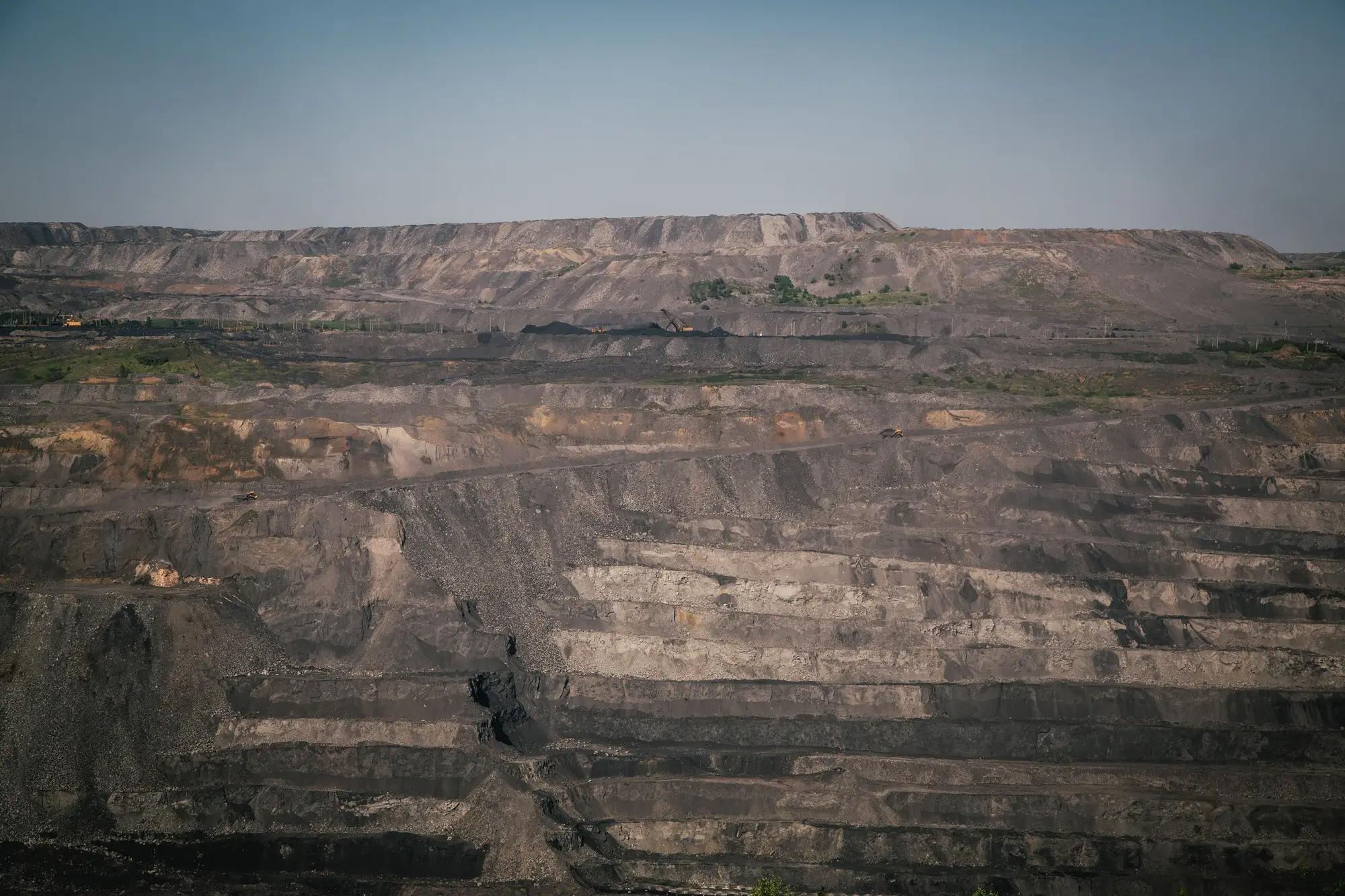
Stereo satellite imagery is taken over each pit and its stockpiles every month. Before the pilot starts you are told which operations have a workable pass and which do not.
- 03Process
Measure
A surface model is built from each month's stereo pair. The change between months gives the volume moved off bench faces and the volume gained or lost on stockpiles.
- 04Process
Convert
Volume change is converted to a monthly output estimate using the method in the methodology note.
- 05Output
Hand-over
The CSV series and the note come back for each operation, keyed on the operation name and a month column. Each new month is added to the same series, so your lookup into the model does not move.
Limits
These are the conditions under which a monthly series can mislead you. The delivery says which one applies to which month.
| Condition | Effect on the series |
|---|---|
| Surface pits and stockpiles only | The method sees open pits and stockpiles. It does not apply to fully underground operations, and for a mixed operation it sees only the surface part. |
| Volume, not composition | What is measured is material moved. Ore grade, metal content and material type are outside what a stereo pass can see. |
| Cloud makes gaps | A cloudy month over a site can mean a late or missing reading. Those months are flagged as gaps. |
| Directional, not a match | No accuracy figure is published against disclosed output. Treat the series as a directional monthly read and check it against reported history in your own model. |
| Half a meter is the floor | At 0.5 m or finer, bench faces and stockpile outlines resolve well. Small changes in height or extent inside a pixel or two do not show, and a quiet month on a large pit can sit inside that noise. Read single months as a direction, and trends across several months as the signal. |
Why this exists
Between quarterly reports, an operation's output is a hole in your model. You carry the last print forward, adjust for guidance and wait for the operations update. If a pit ramps or stalls in the first month of a quarter, you learn about it after the company reports. Calls to investor relations and trucking proxies fill part of the gap, and neither one measures what came out of the pit.
Who it's for
- Mining sector analysts who want an operation-level read between quarterly reports.
- Quant and alternative-data teams that test new series against reported history before using them.
- Teams tracking a defined list of named mines or quarries.
Who it's not for
- Teams that need a figure matching the company's disclosed production to the tonne.
- Underground mines.
- Ore grade, assay or material-type questions.
- Real-time or intra-month tracking.
Questions from evaluators
Does it match disclosed production?
No. No accuracy figure is published against disclosed output. Use it as a directional monthly estimate beside disclosed history.
How do we validate it?
Against your own data. Line the series up with reported quarters for the operations you cover and judge the fit yourself. The volume-moved file lets you apply your own conversion.
What about underground operations?
They are out of scope. The method measures surface pit and stockpile volume.
Does cloud cover affect it?
Yes. A cloudy month can mean a delayed or missing reading, and the series shows it as a gap.
Can it tell ore grade or material type?
No. It measures volume moved.
How does it get into our model?
As CSV, one series per operation, with a month column you can key on. Nothing to install.
Which operations can you cover?
Named surface mines and quarries. Before a pilot starts we check that your list can be imaged well enough to produce a series.
How do we buy it?
Through a pilot. The scope covers the list of operations and the length of the pilot, and you get it in writing to take through your own approval process.
Send the list of operations you track.
We will tell you which ones the pilot can cover.