What is bench advance, and why is it the clearest output signal
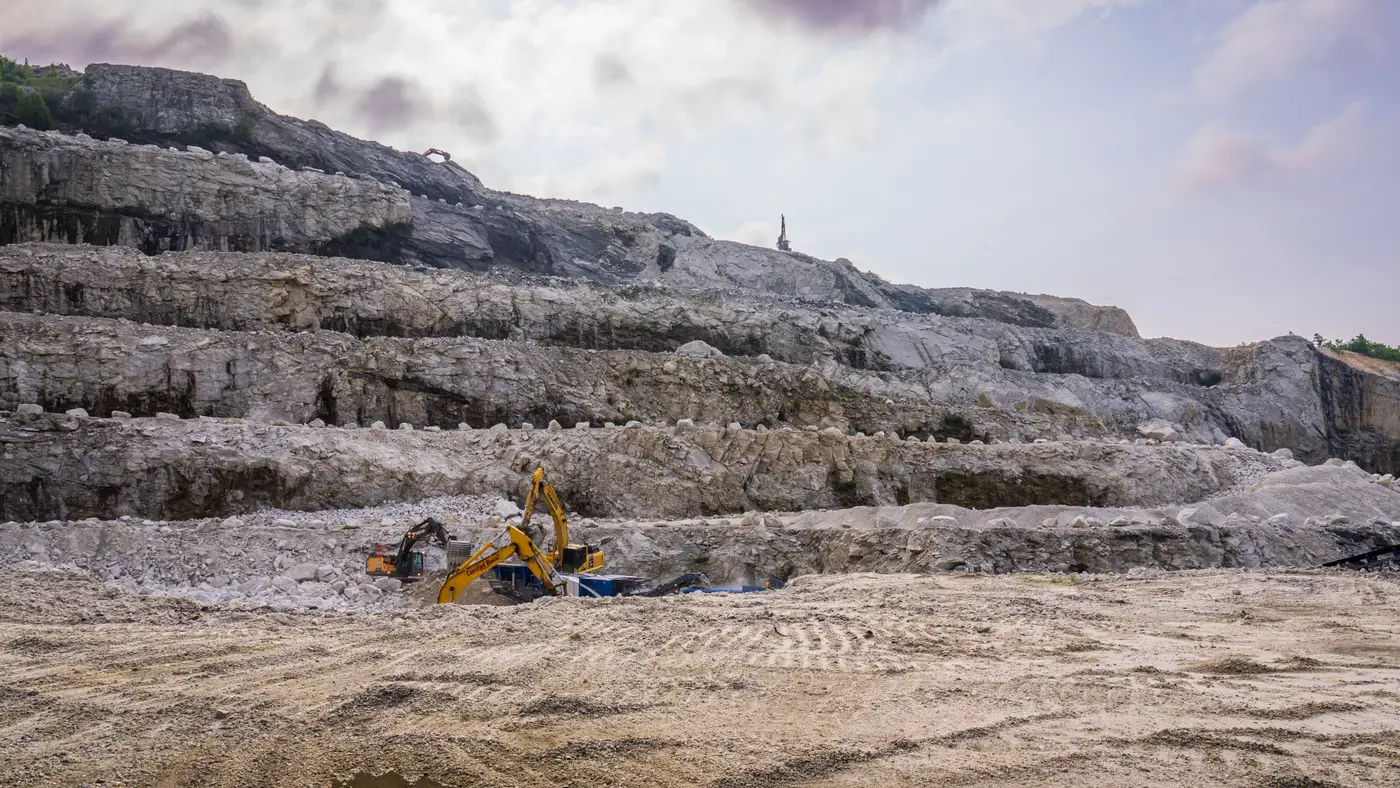
Bench advance is the rate at which a working level in an open pit moves forward, or down, as crews drill, blast, load, and haul material away from the face. It's the single most direct thing you can see happening at a mine between one month and the next. More direct than truck counts, more direct than stockpile height, and a lot closer to what actually ends up as tonnes in the quarterly report than most of the proxies analysts default to.
What a bench actually is
A bench is a horizontal step cut into the pit wall. It has a crest at the top, a toe at the bottom, and a face connecting the two. Large open pits typically run bench heights of 10 to 15 metres, though the number is set by the mine's geotechnical design and varies by commodity and rock type. When a mine advances a bench, the crest line retreats into the hillside as material gets blasted free and trucked to the mill or the waste dump. Measure that retreat over a known bench height and you have a volume. Convert the volume with a density assumption for the material type, and you have a tonnage estimate for that face, for that month.
This is why bench face movement is worth tracking on its own, not just as a backdrop detail in a wider pit image. It's the part of the operation where rock physically leaves the ground.
Why it beats the other signals analysts lean on
Truck counts are noisy. Trucks idle, double up at the crusher, or get parked for maintenance, and none of that tells you much about ore moved. Stockpile height is confounded by blending and reclaim, a pile can grow from new mining or just from a stacker moving material around from elsewhere on site. Haul road traffic tells you activity is happening somewhere, not how much came out of the ground.
Bench advance skips all of that. It's the face itself retreating. There's no intermediate step between the measurement and the thing you're trying to estimate.
Pit progression rate is the mine-wide version
A single bench's advance tells you about one working level. Pit progression rate adds up advance across all the active benches in a pit, across pushbacks and phases, to give a read on how fast the whole operation is pulling material. This is the number that tracks closest to what a quarterly disclosure will eventually show, because the disclosure reports ore and waste tonnes for the pit as a whole, not face by face.
An operation running two benches hard while a third sits idle for a pushback redesign will look very different in pit progression rate than it would if you only watched the one bench that happens to face the satellite's best angle.
Getting bench height right matters more than it sounds
Analysts who skip straight to a volume number without pinning down bench height are the ones who end up with estimates that don't hold up against the eventual filing. Declared bench height for a mine's design sometimes shows up in a NI 43-101 or JORC technical report, but a lot of the time it isn't published at all, or the operation has shifted bench geometry mid-life without updating the public documentation. The reliable way to check is to measure the terrace steps directly from a very high resolution image, panchromatic, sub-0.5 m, where the crest-to-toe shadow line is sharp enough to count benches by eye. Guess wrong on bench height and the volume conversion is off by the same margin, no matter how precisely you measured the crest retreat.
Turning this into a monthly number across a book of names
Reading bench advance off two images for one pit is a Tuesday afternoon. Doing it every month, consistently, across every named operation in a sector book, ahead of each company's own disclosure date, is a different kind of task entirely, and it's exactly what a monthly CSV series built off this kind of pit volumetric read, delivered per named mine or quarry is for.
If bench advance is the number you've been estimating by hand, it's worth seeing what a monthly feed of it looks like.