Open-pit vs underground mines: why volumetric monitoring only works for one
If you cover a mining portfolio with a mix of open-pit and underground assets, you've probably asked whether satellite-based production tracking can cover both. It can't, and the reason comes down to what's sitting in front of the sensor at each type of operation.
Why bench faces give you a read on tonnage
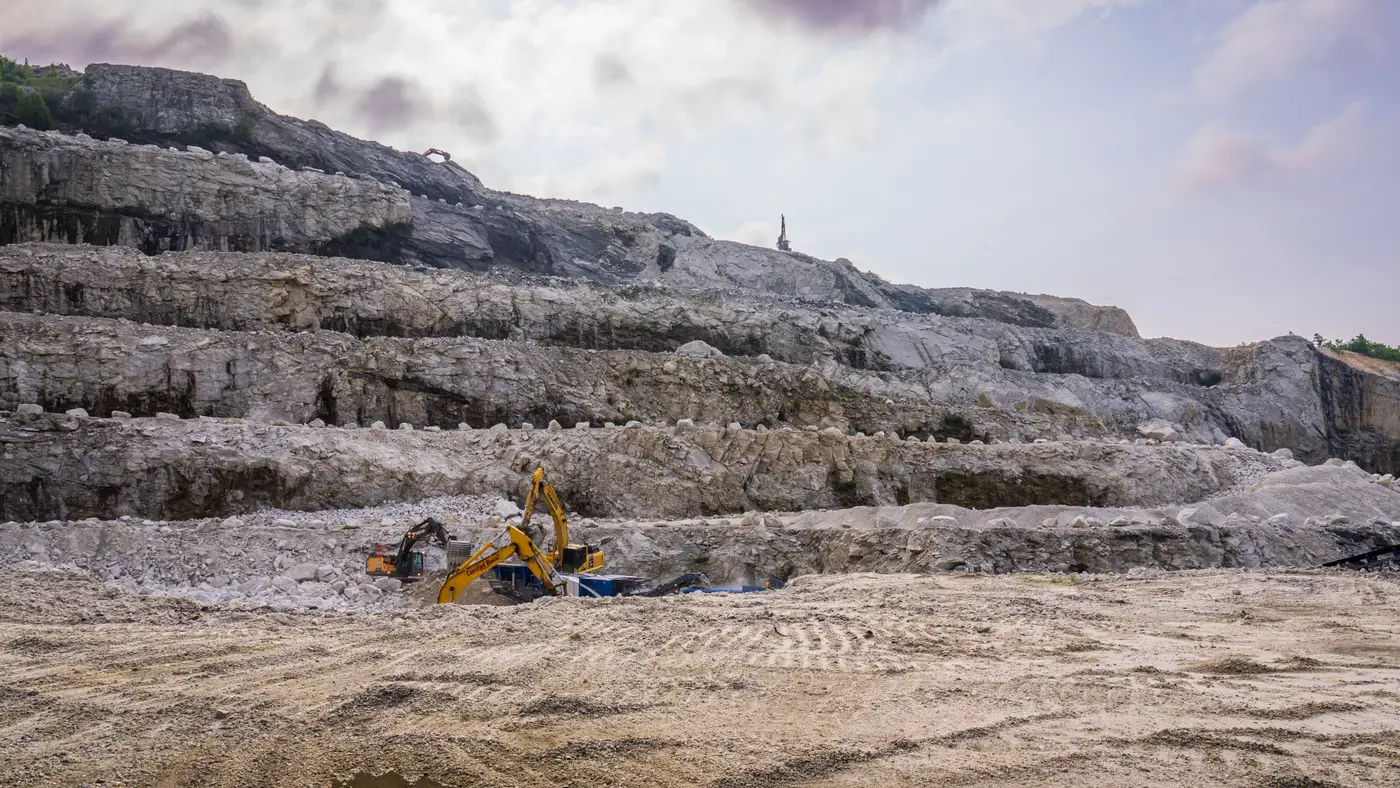
An open pit is, geometrically, an admission of guilt. Every tonne that leaves the ground shows up as a change in surface elevation somewhere: the bench face retreats, a waste dump grows, a stockpile at the ROM pad gets taller or shorter. Two stereo satellite passes a month apart, differenced into a DEM, give you a volume change for each of those features. Apply a density assumption appropriate to the commodity and you've got a tonnage estimate that moves in step with what the operation is doing on the ground, not what its quarterly report says it did three months ago.
This works because the extraction face is the surface. There's no void to infer, no proxy to argue about. The bench steps down, the pit gets wider or deeper, and the math is geometry plus bulk density. It's also why the method is cadence-limited rather than accuracy-limited: monthly passes catch a full blast-and-haul cycle at most operations, and panchromatic imagery at sub-half-metre resolution is sharp enough to pick out individual bench lifts, not just the overall pit outline.
What a bench face tells you, and what it doesn't
Bench face monitoring has real limits even within open-pit operations. A pit can sit idle for a month on maintenance and the DEM difference will say so honestly, which is useful, but it also means a single month's read needs the trend around it, not just one snapshot. Waste rock movement and ore movement both show up as volume change, so distinguishing stripping ratio shifts from actual ore output requires knowing the mine plan, not just the imagery. And a pit under active backfill, or one running a tight footprint with limited dump space, can mute the visible signal even while production continues at a steady clip. None of that breaks the method. It just means the estimate is a read on material movement, corroborated against disclosure, not a replacement for the company's own reconciled numbers.
Underground production estimate from satellite imagery: why the geometry fails
Underground operations break all of this, because the thing you're trying to measure, ore coming out of a stope hundreds of metres below surface, leaves no footprint at the surface that scales with tonnage the way a bench face does. A shaft collar or decline portal is a fixed structure. It doesn't get visibly bigger as the mine produces more or smaller as it produces less. Surface subsidence, where it happens at all, lags extraction by months or years and relates to geotechnical behaviour, not monthly output. Ventilation infrastructure and headframes look the same in a boom quarter as in a quiet one.
The one surface feature that does move at underground mines is the ore stockpile, where hoisted material gets stacked before processing or shipment. In principle that's measurable the same way an open-pit stockpile is. In practice it's a weak proxy on its own: it sits downstream of hoisting, haulage, and mill feed scheduling, all of which can decouple stockpile height from what's being broken underground in a given month. A pit face is the extraction point. A stockpile at an underground mine is an inventory buffer three steps removed from it, and reading tonnage off a buffer is a different exercise than reading it off the face the rock is coming from.
That's the dividing line. Volumetric monitoring is a surface-geometry method, and open-pit and quarry operations are surface-geometry businesses in a way underground operations simply aren't.
Mine Production Nowcast turns that bench-face and stockpile geometry into a monthly output estimate per named pit, ahead of the operator's own quarterly numbers.
If your coverage list has an open-pit or quarry operation you'd like a monthly read on, that's exactly the use case this is built for.