How cloud cover affects a monthly pit volumetric read
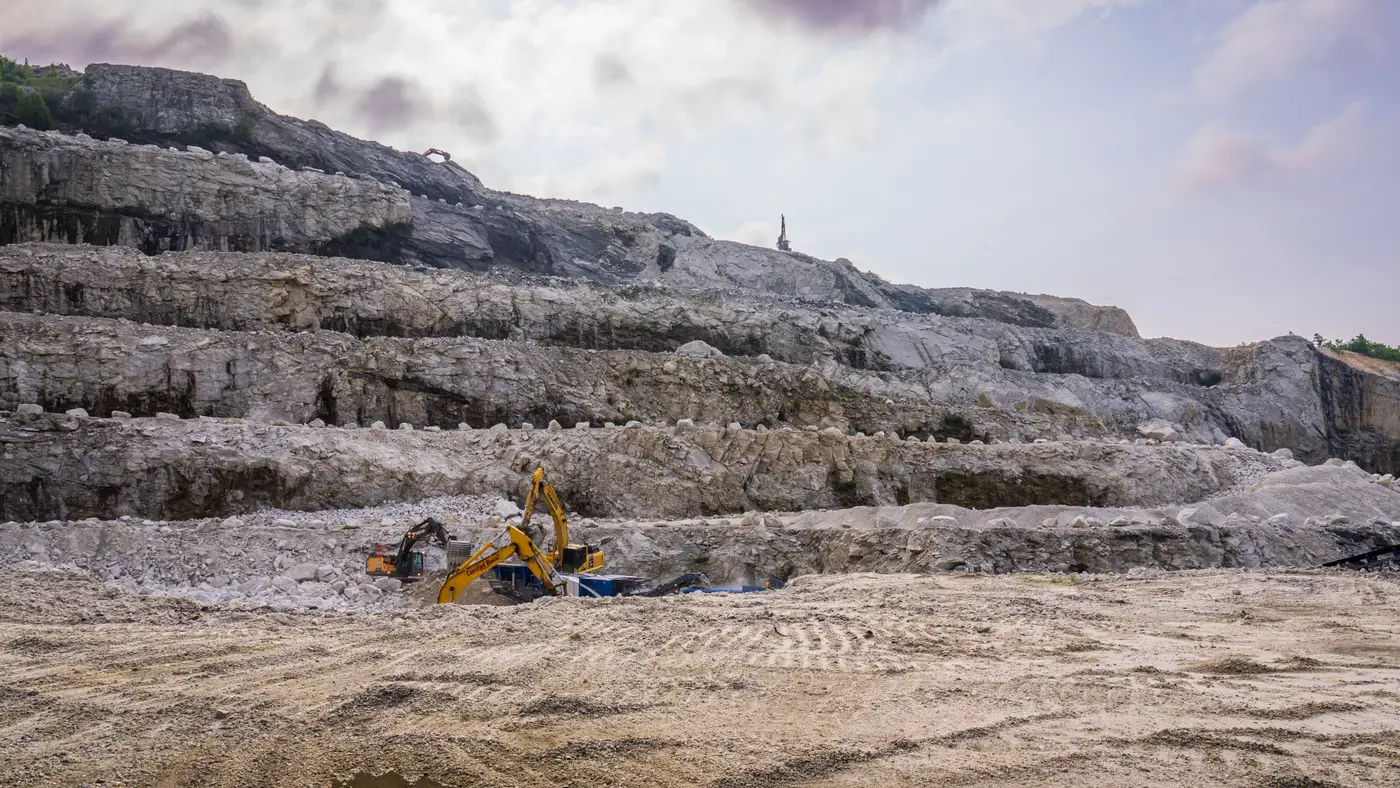
A pit volumetric read depends on two clean images of the same ground, taken from slightly different angles, close enough in time that nothing has moved between them except what the mine moved. That's the stereo pass. It's how you get bench elevations and stockpile shapes without anyone on site holding a GPS rod.
Cloud cover breaks that in the most basic way possible: it blocks the sensor from seeing the ground at all. The imagery behind this kind of read is optical and panchromatic, not radar, so a cloud deck over the pit on tasking day isn't a minor haze to correct for in post-processing. It's an opaque layer between the satellite and the bench faces. No usable stereo pair comes out of that pass, full stop.
Why clouds break an optical stereo pass
Stereo volumetric work needs both images in a pair to show the same terrain at full resolution. If cloud sits over part of the pit in one of the two passes, that section of the model has a hole in it. Partial cloud over a haul road or a ramp is usually tolerable if the benches and stockpile toes are clear. Cloud sitting directly over an active bench face or a stockpile you're tracking month to month is not something you can average away. The volumetric number for that area just doesn't exist for that pass.
This is also where the VHR revisit schedule matters more than people expect. A tasking order for a ≤0.5 m panchromatic pass gets queued against the satellite's path over that location. If the first attempt comes back clouded out, the next opportunity to retask that same pit might be days away, sometimes longer depending on orbit geometry and competing tasking demand in the region. Each failed attempt pushes the window for that month's read closer to the deadline, or past it.
What a missed epoch means for your estimate
When no clean stereo pair comes through before the month closes, you get a missed monthly epoch. Not a bad estimate. No estimate. The practical choices from there are limited: carry the prior month's volume forward as a placeholder, interpolate between the last good read and the next one once it arrives, or flag the operation as unread for that period and wait.
None of those is as good as a direct read, and an analyst building a production estimate ahead of disclosure should treat a carried-forward or interpolated figure differently than a measured one. If a mine sits in a region with persistent wet-season cloud, say parts of the tropics during monsoon months, expect more gaps clustered in certain quarters and fewer in the dry season. That's a pattern worth building into how much weight you put on any single month's read for that operation, rather than something that can be engineered away.
A stereo pass gap also compounds if you're tracking several operations in the same basin. Regional weather doesn't respect property lines, so a cloud system sitting over one district can blank out every pit in it for the same tasking window, not just one.
Working around revisit gaps
There's no way to shoot through cloud with a panchromatic sensor, so the practical mitigation is on the tasking side: more retasking attempts across the window, and treating a run of clear days as a chance to bank the read early rather than waiting until the last days of the month and hoping for a gap in the weather. A monthly cadence gives some slack for retries that a tighter schedule wouldn't, but it's not unlimited slack, and a long stretch of overcast can still eat the whole window.
For an analyst piecing together an output estimate between quarterly disclosures, the honest approach is to note which months came from a direct stereo read and which came from carrying a prior figure forward, rather than smoothing the two together as if they're the same quality of evidence.
That's the kind of distinction the monthly CSV series behind Mine Production Nowcast is built to carry, read by read, per operation, so a gap shows up as a gap instead of getting hidden inside an average. If you're tracking output ahead of a company's own numbers, it's worth seeing what a clean run of monthly reads actually looks like for your named operations.