Field notes: a dividend cut, three months after the stockpile told us
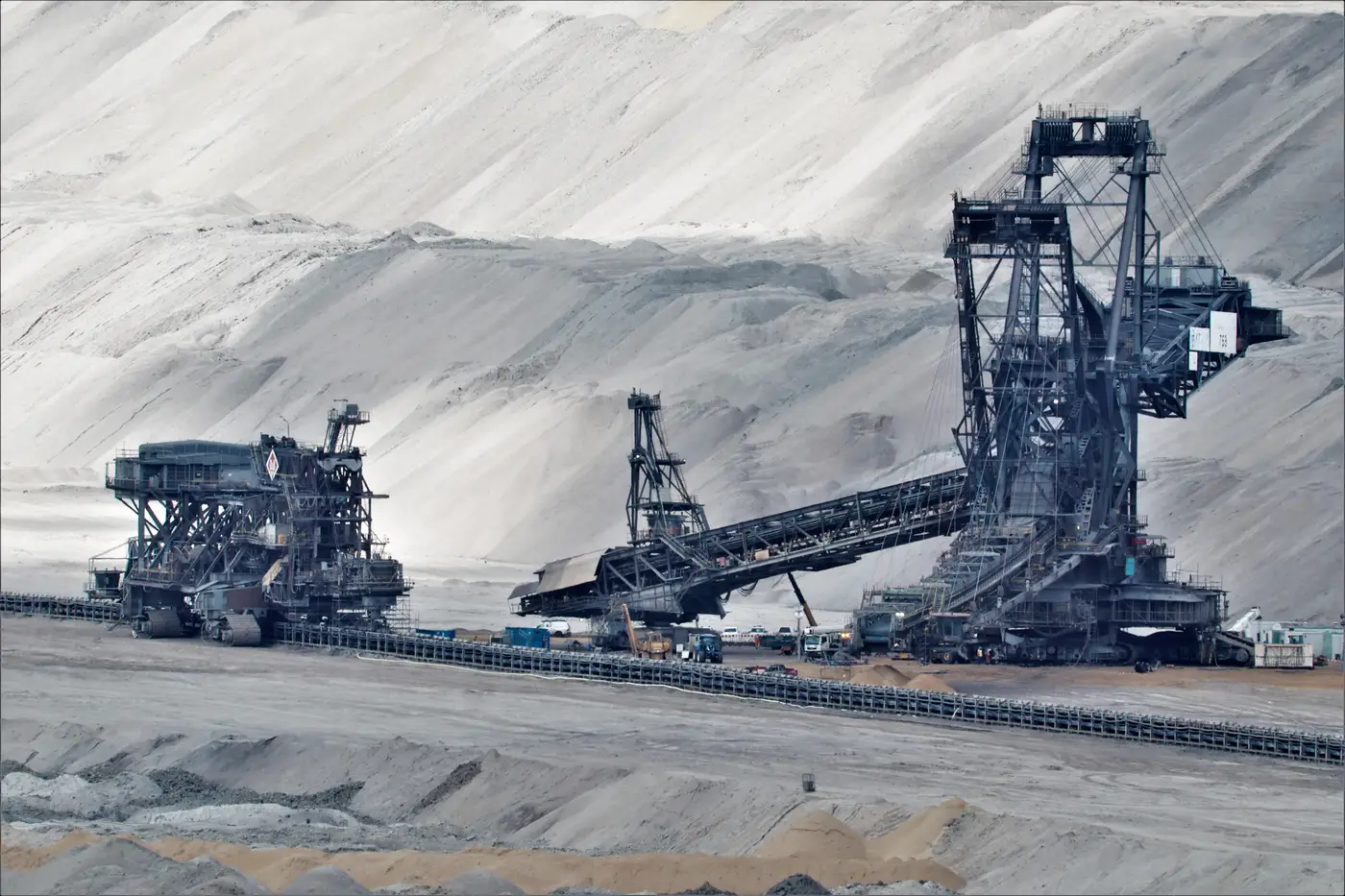
There's a particular kind of quiet that settles over a stockpile when an operation is winding down before it says so. Not an empty pad, not a shutdown. Just a run of rows where ore going out stops keeping pace with ore coming off the bench, and the pile that was holding steady through the spring starts shrinking a little every month.
I started paying closer attention to one of these a while back, a mid-tier polymetallic operation that had spent the better part of two years running near capacity. Nothing in the public filings suggested trouble. Guidance was reaffirmed as recently as the prior quarter. The dividend had been steady for six straight payouts, the kind of number management likes to put on a slide.
But the volumetrics told a different story starting in month one of what I'll call the quiet quarter. Bench advance slowed. Not stopped, slowed, the kind of change you'd miss if you were only checking in once a quarter instead of once a month. The crusher-feed stockpile, which had been holding a fairly tight band for a year, started drawing down steadily. By month two the draw rate had roughly doubled. By month three, waste-to-ore ratios implied by the pit geometry had shifted enough that it looked less like a sequencing choice and more like the operation was mining lower-grade material to keep tonnage numbers from cratering, a move that buys a quarter or two of headline output at the cost of margin.
None of that shows up in a press release. Companies don't issue a statement saying "we are quietly blending down grade to protect the tonnage line." They issue a statement three months later that says something closer to "given prevailing commodity prices and operational headwinds, the board has elected to reduce the quarterly distribution." By the time that sentence hit the wire, anyone watching the pit had already had a full quarter to sit with the slowdown.
This is the part of the job that doesn't get talked about enough: guidance and dividend policy are lagging indicators dressed up as forward-looking statements. The board isn't lying when it reaffirms guidance in month one of a slowdown. It genuinely doesn't know yet, or it knows and is hoping the back half of the quarter fixes it. Either way, the stockpile doesn't have that luxury.
Material moved or it didn't. Faces advanced or they didn't. There's no quiet period for a bench face.
What struck me most, going back through that run of images, wasn't the drawdown itself. It was how unremarkable it looked in isolation. A single month of reduced pit activity is noise, could be weather, could be a planned maintenance window, could be nothing. It's only when you stack three or four consecutive reads against the prior year's pattern that the slowdown stops looking like noise and starts looking like a trend the company hasn't disclosed yet. That's the whole argument for a monthly cadence over a quarterly one: one data point is a guess, four in a row is a direction.
I don't think this particular operation did anything wrong. Grade blending to manage through a rough stretch is a normal operational decision, and the dividend cut that followed was probably the right call given where the realized price had drifted. What bothers me is the lag. Three months is a long time to hold a position on old information when the pit itself was already telling you something different.
That's the gap a monthly output read per operation is built to close. If you'd rather watch the bench face than wait for the earnings call, Mine Production Nowcast is worth a look before the next quarter closes.