Field notes: the Arctic iron ore pit that only moves six months a year
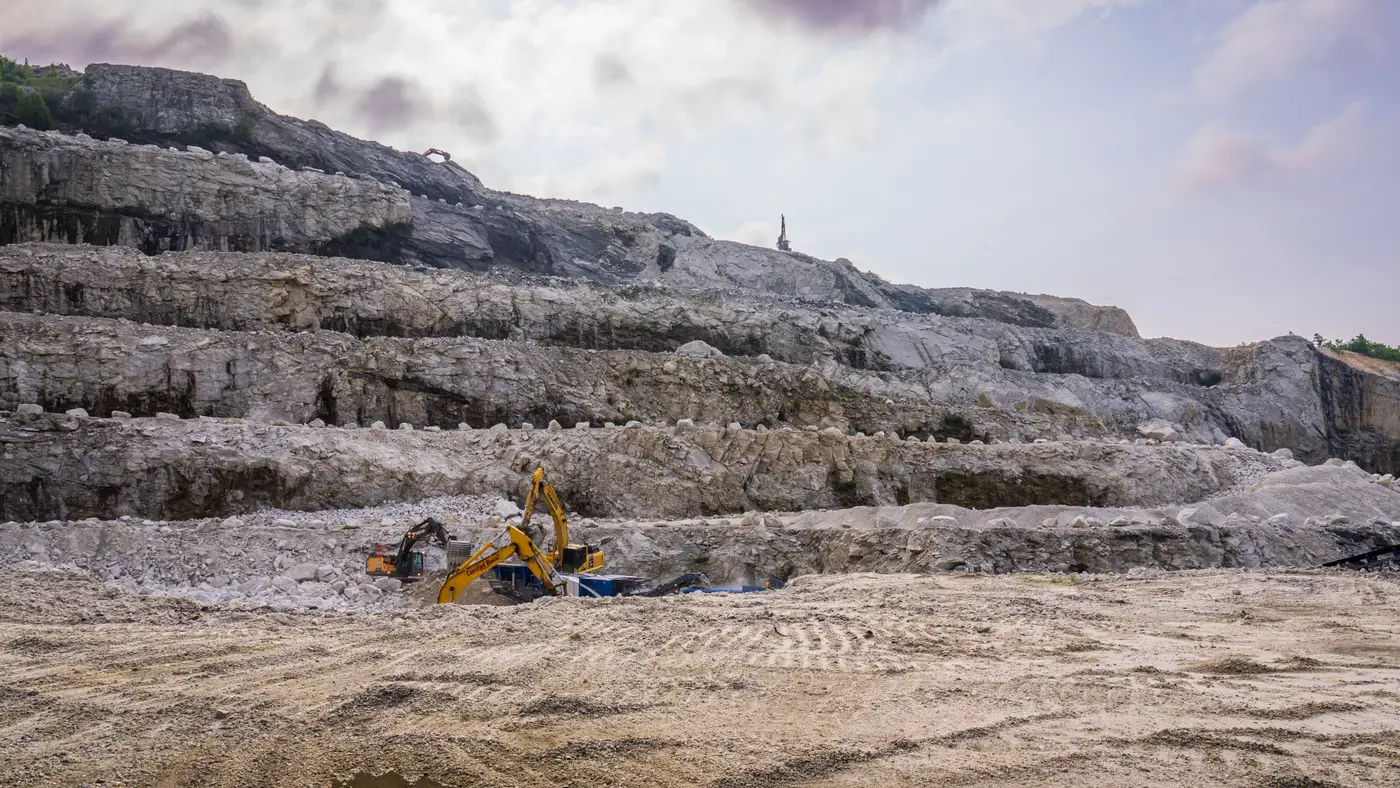
Most pits run on a quarter. Blast, haul, crush, ship, report. You can set a watch to it almost anywhere in the world, except above about 60 degrees north, where the calendar that governs the operation isn't the fiscal one. It's the ice.
I've spent a few winters pulling imagery over Arctic iron ore operations, and the first thing that throws you if you're used to temperate pits is how little changes bench to bench for months at a time. September through April, you can watch the same stockpile sit at the same elevation, the same haul roads un-plowed in the same places, and start to wonder if the operation has gone quiet. It hasn't. It's just storing.
That's the pattern worth understanding if you're trying to size output ahead of a disclosure: these sites don't move material and ship it in the same window. They mine through the cold months and stage it, because the only way the ore leaves is by sea ice road or by a shipping season that runs something like sixteen to twenty weeks, depending on how the ice behaves. Everything extracted before breakup sits in a stockpile doing nothing visible until a vessel can get alongside or a tundra road firms up enough to bear a loaded truck. A pit that looks dormant from overhead in February can be running a full blast cycle underneath that stillness. The movement you'd normally read as production, truck counts at the face, bench advance, pit floor descending, is still there. It's just that the second half of the story, the drawdown, hasn't started yet.
So a single pass tells you less than it would at a temperate operation. What tells you something is the comparison across passes: how much new bench has been cut since the last clear look, how the stockpile footprint has grown against the same month a year ago, whether the waste dump is climbing faster or slower than the ore pile next to it. None of that needs the mine to be shipping. It needs the mine to be moving rock, and in an Arctic pit, rock moves on a schedule that has nothing to do with navigable water.
Then breakup comes, or the ice road opens, and the second half of the year tells a completely different story. The stockpile that built all winter starts shrinking fast, sometimes faster than the mining rate would suggest, because an operator under pressure will draw down inventory hard to make a shipping window before freeze-up closes it again. Read that stockpile curve on its own, without the build-up months behind it, and you'd badly misjudge the year's output. Read the two halves together, accumulation through the dark months, liquidation through the open ones, and you get something closer to what the operation actually produced, months before anyone files a number.
That's really the whole lesson of watching these sites: the frozen months aren't a gap in the record. They're half of it, just stored rather than shipped. A pit that only moves cargo six months a year still moves rock twelve, and if your read on output only starts counting when the ships show up, you're missing the half that was already on the ground waiting.
We built the monthly pass-over-pass approach behind Mine Production Nowcast with exactly that kind of operation in mind, among others: track bench advance and stockpile volume through the quiet season, not just the shipping one, so the production picture doesn't have a blind spot every winter.
If you're carrying an Arctic iron ore name on your coverage list, it's worth seeing what a year of monthly stockpile and bench reads looks like before the next disclosure lands.