Can satellite imagery estimate ore grade, and what pit volumetrics actually tell you
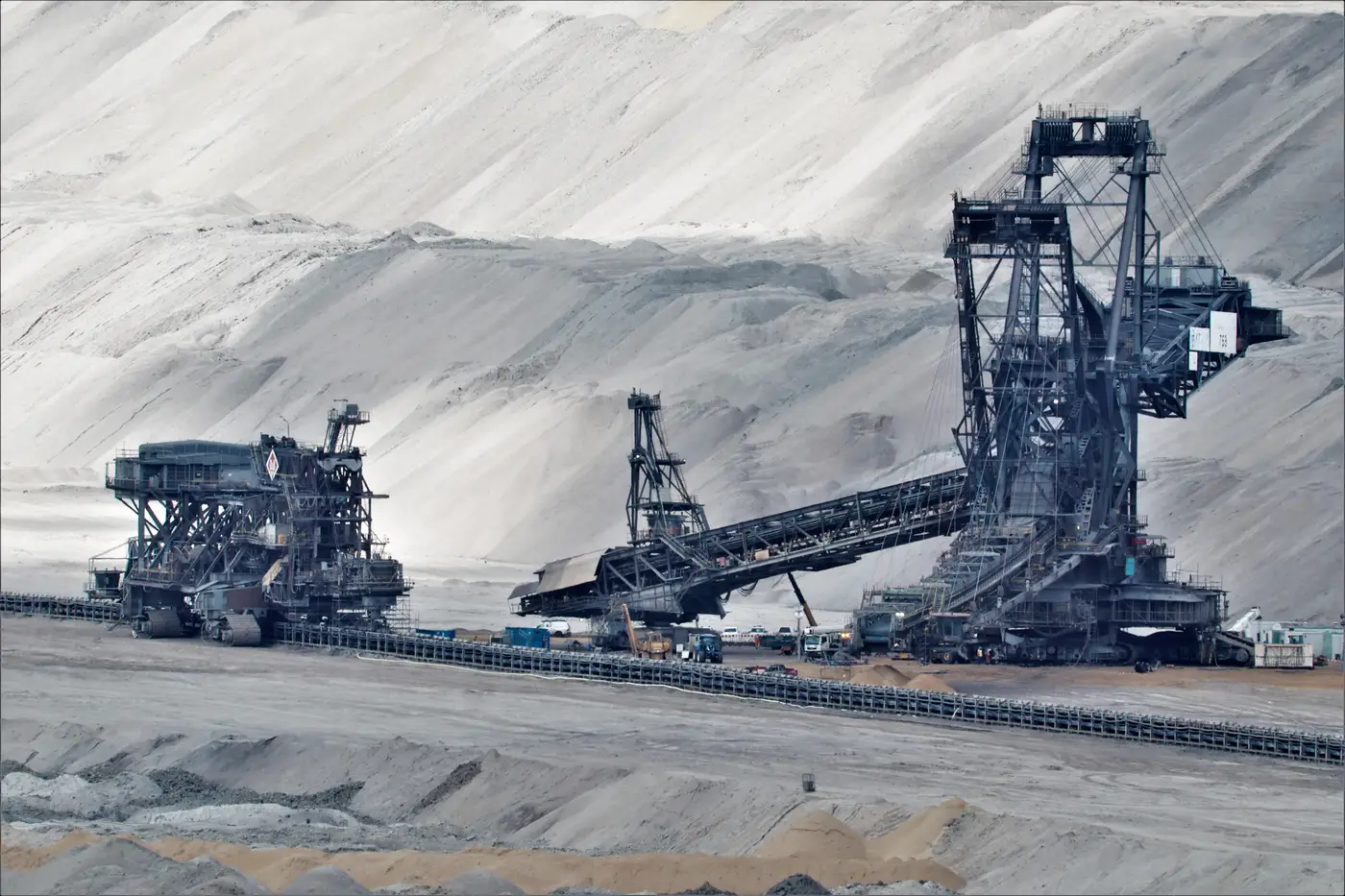
Short answer: no. Stereo satellite imagery resolves surface geometry, bench faces, stockpile shapes, the footprint of a waste dump growing month over month. It can't tell you the copper content of the rock in that stockpile, or the gold grade of the ore feeding the mill. Grade is a chemistry question. Imagery answers a geometry question.
That distinction matters more than it sounds, because the two numbers get conflated constantly in how analysts talk about mine performance. A pit can look busy on imagery, benches advancing, trucks hauling, stockpiles climbing, while grade is sliding hard because the mine plan has moved into a lower-grade domain. Volume moved and value produced are not the same curve, and they can diverge for a quarter or two before anyone outside the company notices.
Grade vs tonnage satellite: two different questions
Tonnage is something you can get a reasonable read on from overhead imagery. Compare two stereo passes a month apart, measure the change in bench elevation across the pit and the change in stockpile volume, apply an assumed bulk density for the rock type, and you have a material-moved estimate. That's the mechanism behind pit volumetrics: a geometry-to-mass conversion that tracks the pace of mining activity well enough to flag a ramp-up or a slowdown ahead of the company's own quarterly numbers, even though it never weighs a single truckload.
Grade doesn't show up anywhere in that calculation. It comes from assay results on drill core, blast-hole samples, or mill feed, lab chemistry that happens underground or in a sample prep facility, nowhere near the pit surface a satellite can see. No amount of resolution changes that. A 0.5 m panchromatic image of a bench face shows you rock texture and shadow, not parts-per-million.
So when a mine reports a drop in production tonnes but a rise in recovered metal, that's a grade story, and pit volumetrics alone won't catch it. What they will catch is the tonnage side of the equation: whether the operation moved more or less material than the prior month, and roughly where in the pit that material came from.
Where pit volumetrics run into limits
Even on the tonnage side, there are things volumetrics can't disentangle. An operation can move the same total volume while shifting the mix between ore and waste, stockpiling lower-grade material for later blending instead of sending it straight to the mill. From the surface, a stockpile is a stockpile. Imagery doesn't distinguish a direct-ship-ore pad from a low-grade hold pile sitting next to it unless the operator has set them up as visibly separate areas, and even then the imagery is just reading shapes on the surface.
Bulk density assumptions add another layer of imprecision. Converting a volume change into tonnes requires a density figure for whatever rock type is being moved, and that figure shifts depending on where in the pit you're looking, oxide cap versus fresh sulphide, waste versus ore domain. Get the density wrong and the tonnage estimate drifts with it, even though the volume measurement itself was solid.
None of this makes the volumetric read useless. It's the closest thing to a real-time proxy for mining rate that doesn't require waiting on a company's own reporting cycle, and for an analyst trying to get ahead of a quarterly print, a read on whether an operation is scaling up or pulling back is often the more urgent question than exact grade. Mine Production Nowcast turns that bench-and-stockpile signal into a monthly series per named operation, built to flag the production trend before the disclosure lands.
The practical takeaway
Treat imagery-derived tonnage and company-reported grade as two separate inputs that answer two separate questions. One tells you how much rock an operation is moving. The other tells you what that rock is worth. Confusing them is how an analyst ends up surprised by a grade miss that volumetrics never claimed to predict in the first place.
If you're trying to get a read on an operation's output trend before the next quarterly report, that's exactly the gap Mine Production Nowcast is built to fill.