Bench vs berm: what's the difference in an open pit mine
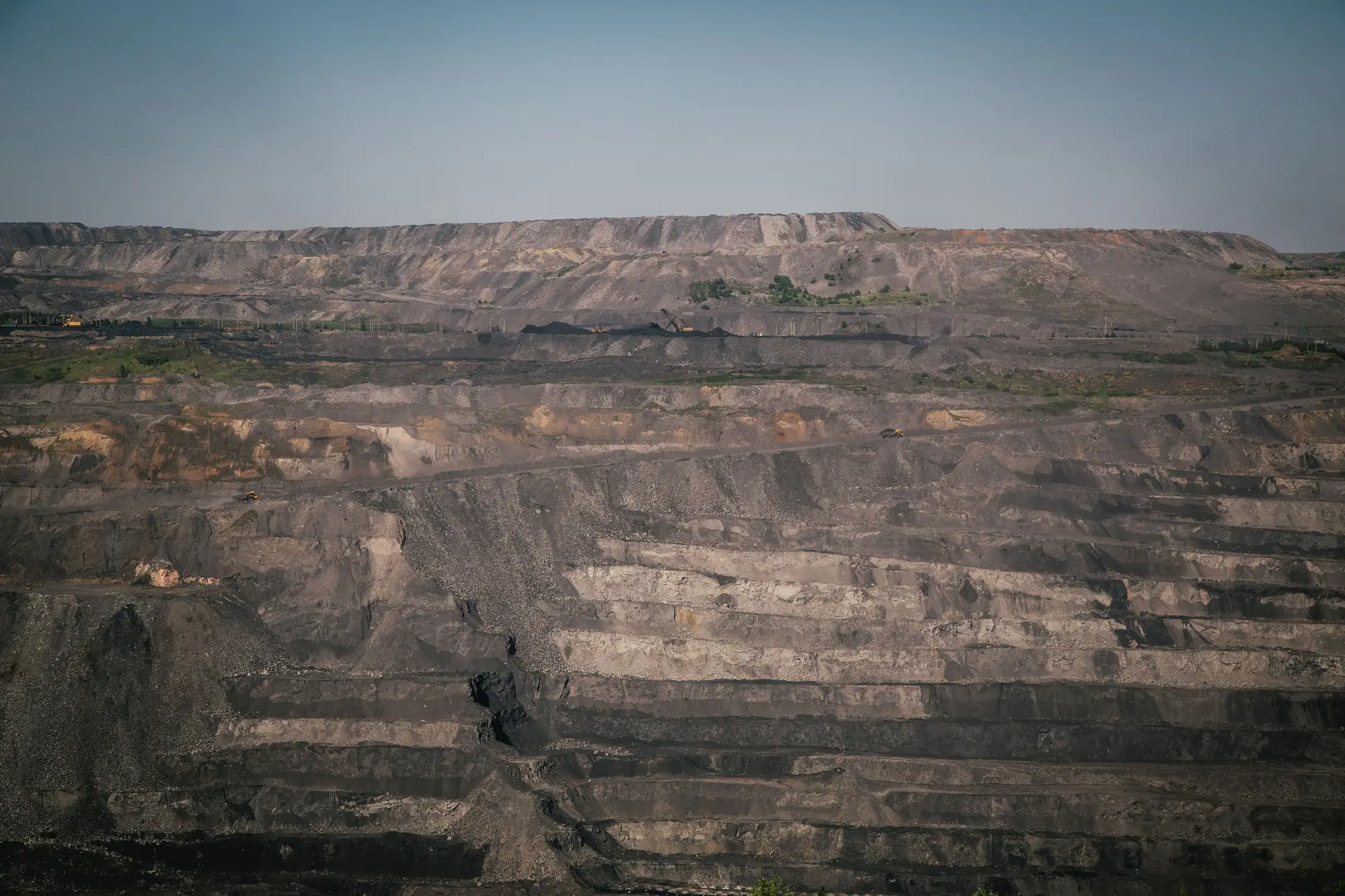
Anyone who's sat through a reserve report or a geotech slide deck has heard both words thrown around like they mean the same thing. They don't. A bench and a berm are two different structures in an open pit, and mixing them up in a note to clients is the kind of error that gets flagged by anyone who's actually walked a pit floor.
What a bench is
A bench is a horizontal working level cut into the pit wall. Stack enough of them and you get the stair-step profile that makes an open pit look like a terraced hillside from the air. Each bench has a face (the vertical or near-vertical wall where blasting and excavation happen) and a crest (the top edge). Material comes off the face, gets loaded, and moves to a crusher or stockpile. The bench is where the ore or waste gets pulled.
Bench height is set in the mine plan, usually somewhere between 10 and 15 meters for a hard-rock pit, though quarries working softer material sometimes run shorter lifts. That number is tied to the reach of the shovel or excavator fleet on site, the blast pattern, and the geotechnical limits on how steep a wall can stand before it sloughs. Change the fleet, and the bench height in the next phase of the pit design usually changes with it.
This is also the number that matters if you're trying to read production off imagery rather than a disclosure. A pit advancing at a known bench height, over a known footprint, over a known number of months, gives you a volume. Volume times density gives you tonnes. That's the whole exercise behind reading pit progression from stereo passes: watch how the benches move and how fast the working face retreats, and you've got a rough handle on throughput before the company says a word about it.
What a berm is, and why it's not the same thing
A berm is a barrier, not a working surface. On a haul road, the berm is the raised ridge of material running along the outside edge, built to a height roughly matching the axle or half the tire diameter of the largest truck on site. It's there so a truck that drifts wide doesn't go over the edge. Haul road berms get maintained constantly because they erode, get clipped by traffic, and need to be pushed back into shape by a grader or dozer.
There are also safety berms on bench crests, same idea: a windrow of material left or built along the edge of a bench to stop equipment or rockfall from going over into the level below. Some operations call this a "bund" instead of a berm, depending on where you trained and which company's safety manual you grew up on. Either way, it's a protective edge feature, not a production surface. No ore comes off a berm. No excavator works a berm face. It just sits there doing its job of keeping trucks and loose rock where they belong.
A bench is where production happens and where advance gets measured. A berm holds loose material and keeps trucks on the road, nothing more. If you're looking at an aerial shot of a pit and trying to work out which lines are production fronts and which are just road edges, that's the distinction to anchor on. The terraced look of the whole pit, often called open pit terracing in plan documents, is the stack of benches. The thin lighter-colored ridges running along haul roads and crests are berms.
Why the distinction matters for reading a pit from above
Get bench and berm confused when you're estimating advance rate, and you'll end up measuring the wrong thing entirely, a haul road edge instead of an actual working face. For anyone trying to size up monthly output from what's visible on the surface rather than wait for the next quarterly filing, knowing which lines in the imagery are doing the digging and which are just keeping trucks on the road is step one. Mine Production Nowcast turns that bench-by-bench movement into a monthly volume estimate per operation, built from the same stereo satellite passes that would otherwise take a trained eye and a lot of patience to interpret by hand.
If you'd rather see that bench advance translated straight into a tonnage estimate every month, that's the whole point of the nowcast.